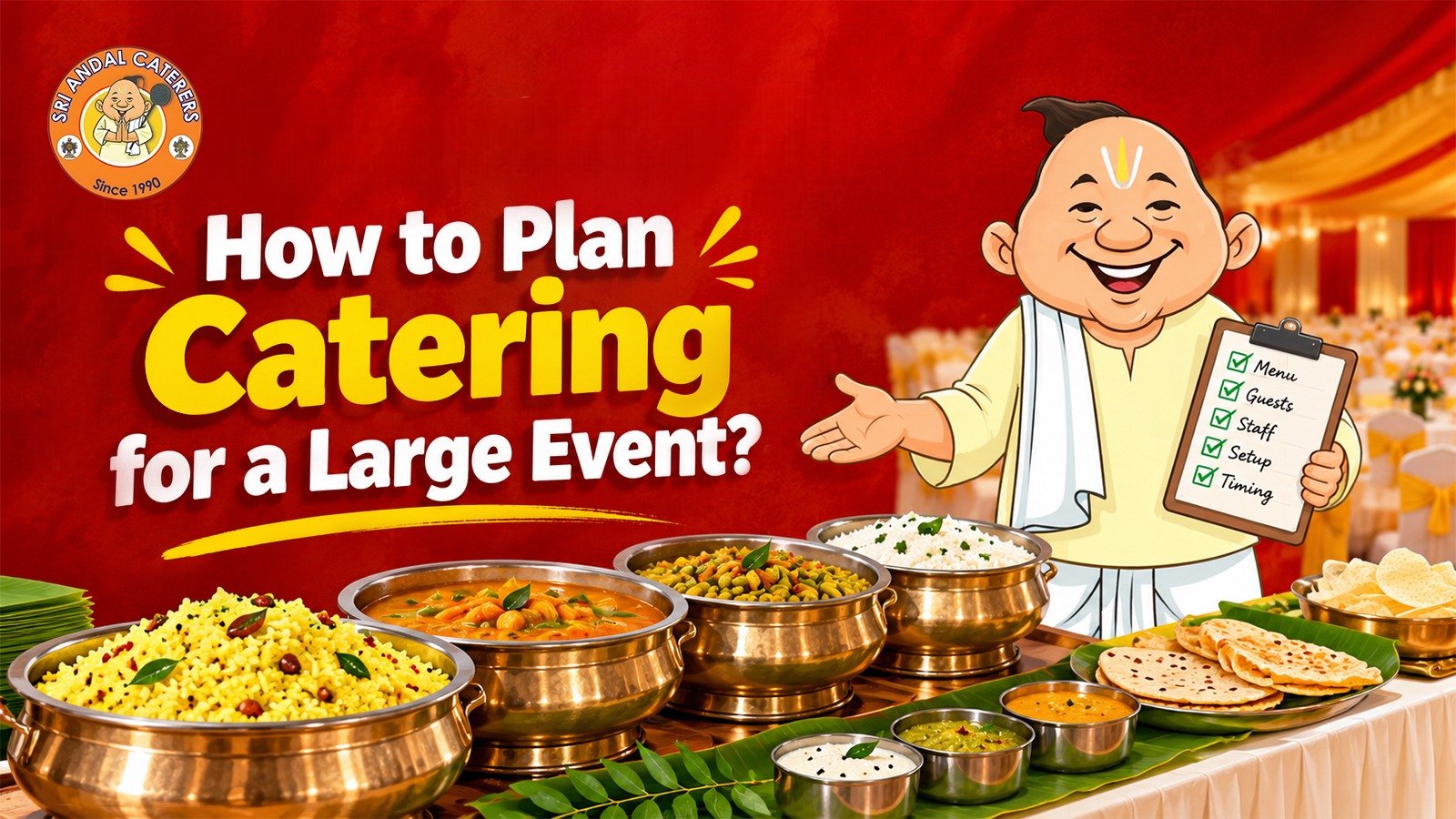
Planning catering for a large event requires careful preparation, thoughtful menu selection, and proper coordination. Whether it is a wedding, corporate gathering, family celebration, or community function, food plays an important role in creating a memorable experience for guests.
A well-organised catering plan helps ensure that food is served on time, guests have enough options, and the entire event runs smoothly. By making a few important decisions in advance, hosts can manage their catering requirements more efficiently.
1. Estimate the Number of Guests
The first step in planning catering is to determine the expected number of guests. An accurate guest count helps the catering team estimate food quantities, arrange serving staff, and plan the required equipment.
Consider the following points while preparing the guest list:
- Confirm the expected attendance with family members or event organisers.
- Account for children and guests with special dietary requirements.
- Share the final guest count with the caterer in advance.
- Discuss how to manage any last-minute changes.
Having a clear estimate reduces unnecessary food preparation and helps avoid shortages during the event.
2. Choose a Menu That Suits the Occasion
Every event has different food requirements. A wedding reception may call for an elaborate traditional meal, while a corporate gathering may require a simple buffet or refreshments.
When selecting a menu, consider the type of event, time of day, guest preferences, and overall budget. Offering a balanced selection of dishes helps create a satisfying dining experience.
For cultural and family celebrations, hosts can consider vegetarian catering services offering appropriate dishes for weddings, religious ceremonies, and family gatherings.
A menu may include welcome drinks, starters, main-course dishes, rice preparations, accompaniments, and desserts. The final selection should suit the occasion without making the menu unnecessarily complicated.
3. Plan the Food Quantities Carefully
Preparing the right quantity of food is essential for large gatherings. Too little food can inconvenience guests, while excessive preparation may lead to avoidable waste.
Food quantities should be estimated based on the number of attendees, the menu, serving style, and the duration of the event.
Discuss portion sizes with the catering team and clarify whether the menu includes snacks, beverages, a full meal, or multiple serving sessions.
It is also helpful to establish a plan for replenishing dishes during service so that food remains available throughout the designated dining period.
4. Consider Different Dietary Preferences
Guests may have different food preferences, allergies, or dietary restrictions. Discuss these requirements with the caterer before finalising the menu.
Depending on the occasion, consider including a variety of vegetable-based dishes, mild options for children, and clearly identified alternatives for guests with specific needs.
If any guest has a food allergy, communicate it directly to the catering team and discuss suitable preparation and serving precautions. Clear labelling can also help guests make informed choices.
5. Decide Between Buffet and Table Service
The serving style influences how guests experience the meal and how the catering team organises the event.
Buffet service: Guests choose from the available dishes at designated counters. This approach offers flexibility and works well for many large gatherings, provided there is enough space and an organised queue.
Table service: Guests are served food at their respective tables. It can offer a more structured dining experience but may require additional staff and coordination.
Traditional meal service: A planned sequence of dishes is served according to the customs of the occasion. This can be suitable for weddings and traditional family functions.
Choose a serving style that fits the venue, guest count, schedule, and nature of the celebration
6. Finalise the Budget in Advance
A catering budget helps hosts make practical decisions without compromising the overall experience. Ask for a clear quotation that explains what is included in the package.
Confirm details such as:
- Menu items and per-person charges.
- Number of service staff.
- Transportation and setup requirements.
- Plates, serving equipment, and dining arrangements.
- Taxes, additional charges, and payment terms.
Understanding these details in advance helps prevent confusion and makes it easier to compare catering options.
7. Coordinate the Event Schedule
Food service should fit naturally into the event programme. Coordinate with the catering team in advance to confirm their arrival, setup, food service, and cleanup timings.
For weddings and other large functions, coordinate meal timings with the main ceremony or programme. This helps prevent long waiting periods and ensures guests can enjoy the food comfortably.
It is also useful to appoint one person from the organising team to communicate any schedule changes to the caterer.
8. Maintain Food Quality and Hygiene
Food quality and hygiene are essential for every event, especially when serving a large number of people. Discuss how dishes will be transported, stored, and served at the venue.
The catering team should follow appropriate food-safety practices, maintain clean serving areas, and handle food at suitable temperatures. Serving counters should also be arranged to allow convenient access without overcrowding.
These preparations help create a comfortable and reliable dining experience for guests.
Make Your Event Memorable with the Right Catering Plan
Successful catering depends on good planning, clear communication, and attention to the needs of your guests. From estimating food quantities to choosing the menu and organising service, every detail contributes to a smoother event.
Planning ahead also gives hosts more time to focus on the celebration rather than last-minute arrangements.
Planning a wedding, family celebration, or large gathering? Connect with Andal Caterers to discuss your menu preferences and catering requirements.
Great celebrations become lasting memories when good food brings everyone together